
Short answer
An office cleaning checklist groups tasks by how often they're needed. Daily: restrooms, kitchens, trash, workstations, and meeting rooms. Weekly: glass doors and partitions, dusting ledges, and detail work in high-use rooms. Monthly or periodic: baseboards, high dusting, carpet extraction, hard-floor machine cleaning, and deep cleaning of kitchens and restrooms. Adjust the frequency to how your office is actually used.
Printable office cleaning checklist
Daily, weekly, and periodic tasks on one page. Free PDF, no sign-up.
A clean office doesn't happen by accident. It takes consistent routines, clear responsibilities, and an understanding of which areas require the most attention.
Whether you're managing a small Manhattan office or a larger workplace with multiple meeting rooms and shared spaces, a cleaning checklist can help ensure important tasks don't get overlooked. Below is a practical starting point for building a commercial office cleaning program, and there's a printable one-page version you can download. Actual cleaning frequency should reflect occupancy, surface materials, employee needs, and the agreed scope of work.
Daily cleaning checklist
Restrooms
- Clean sinks, faucets, and counters.
- Clean toilets and urinals.
- Clean mirrors.
- Replenish toilet paper, hand soap, and paper towels.
- Empty trash bins and replace liners when needed.
- Clean high-touch surfaces with appropriate products.
- Spot-clean doors, partitions, and accessible fixtures.
- Mop floors with products suitable for the surface.
Kitchens and pantries
- Wipe counters, tables, and accessible surfaces.
- Clean sinks and faucets.
- Wipe appliance exteriors.
- Remove trash and recycling according to building procedures.
- Spot-clean spills and visible marks.
- Clean floors.
- Monitor consumables and report shortages.
Workstations and open office areas
- Empty designated trash bins.
- Vacuum or clean floors as appropriate.
- Wipe accessible, clear desk surfaces included in the scope.
- Clean shared tables and common touchpoints.
- Spot-clean visible marks on accessible surfaces.
Cleaning staff should not move confidential documents, handle personal belongings, or clean sensitive electronic equipment without appropriate authorization.
Reception and conference rooms
- Clean tables and accessible furniture surfaces.
- Remove waste.
- Wipe common touchpoints.
- Spot-clean interior glass.
- Vacuum or mop floors.
- Reset rooms according to agreed instructions.
Weekly cleaning checklist
Depending on the workplace and its usage, weekly cleaning may include:
- More detailed cleaning of glass doors and partitions.
- Dusting accessible ledges and shelves.
- Detailed attention to conference rooms and reception areas.
- Cleaning suitable appliance interiors, when included.
- Checking floor edges and less frequently used areas.
- Inspecting areas where dust and residue accumulate.
Not every task needs to be performed weekly in every office. A heavily used pantry may require more frequent attention than a storage room that is rarely occupied.
Monthly and periodic cleaning checklist
Some cleaning tasks require additional equipment, more time, or specialty products. These may include:
- Detailed baseboard cleaning.
- High dusting.
- Interior glass detailing.
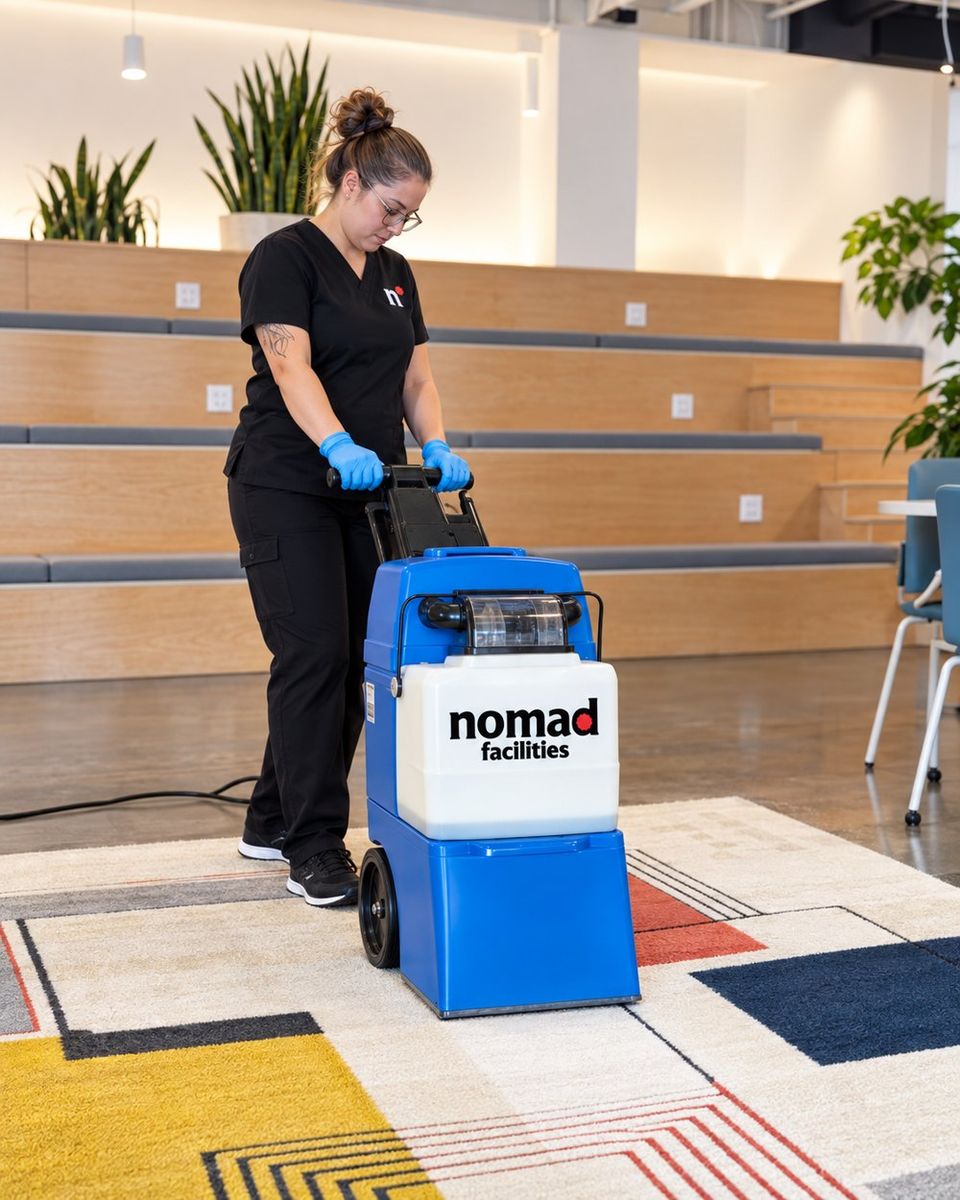
- Carpet spot treatment or extraction.
- Hard-floor machine cleaning.
- Upholstery cleaning.
- Deep cleaning of kitchens and restrooms (see deep and specialty cleaning).
- Specialty stone or metal care.
These tasks may occur monthly, quarterly, semiannually, or as needed. The appropriate frequency depends on usage, surface materials, and manufacturer recommendations.
Who is responsible for cleaning supplies?
This should be established before service begins. Some cleaning companies provide their own equipment and cleaning products, while clients purchase consumables such as paper towels, soap, and trash liners. Other providers may coordinate supply replenishment as an additional service. Your cleaning agreement should clearly explain these responsibilities.
Don't forget quality control
A checklist is only useful when it's followed. A successful cleaning program should establish:
- Who is responsible for each task
- How often the work should be completed
- Who reviews cleaning quality
- How missed tasks are reported
- How the scope changes over time
At Nomad Facilities, our office cleaning programs are built around written scopes, site-specific training, and supervisor reviews.
Cleaning versus disinfecting
Routine cleaning and disinfecting aren't identical. Cleaning helps remove dirt and many germs from surfaces. Disinfection may be appropriate in certain situations, using products suited to the surface and following the manufacturer's instructions. The CDC provides additional guidance on cleaning and disinfecting shared facilities.
The bottom line
Your cleaning checklist should reflect how employees actually use your space. A well-organized program makes expectations clear and helps maintain a consistent workplace environment.