
Short answer
To switch office cleaning companies without disruption, pin down what isn't working, check your current contract's notice period and termination terms, and walk the office with the new provider. Then coordinate insurance and access with building management, start the new team right after the old one's final visit, review the first two weeks closely, and make sure the old vendor's keys and access are returned.
If your office cleaning company isn't meeting expectations, making a change can feel like more work than staying with the problem.
Maybe restrooms aren't consistently cleaned. Perhaps your office manager spends too much time following up on missed tasks. Or you've simply outgrown a vendor that was a good fit when your company was smaller.
Whatever the reason, switching cleaning providers doesn't need to disrupt the workday. With a clear transition plan, you can change vendors while keeping your workplace covered.
Step 1: Identify what's not working
Before contacting new providers, identify the problems you want to solve. Common reasons companies consider switching include:
- Inconsistent cleaning quality
- Missed visits or unreliable staffing
- Slow responses to requests
- Poor supervision
- Inadequate backup coverage
- Growing needs that the current program no longer supports
Try to separate isolated incidents from recurring problems. This will help your next provider understand what matters most.
Step 2: Review your current agreement
Before setting a transition date, review your existing cleaning contract. Pay particular attention to:
- Termination and renewal provisions
- Required notice periods
- Early termination fees
- Final billing arrangements
- Responsibilities for keys, badges, and equipment
If you're unsure about a contractual obligation, have the appropriate person review the agreement.
Step 3: Walk the office with your new provider
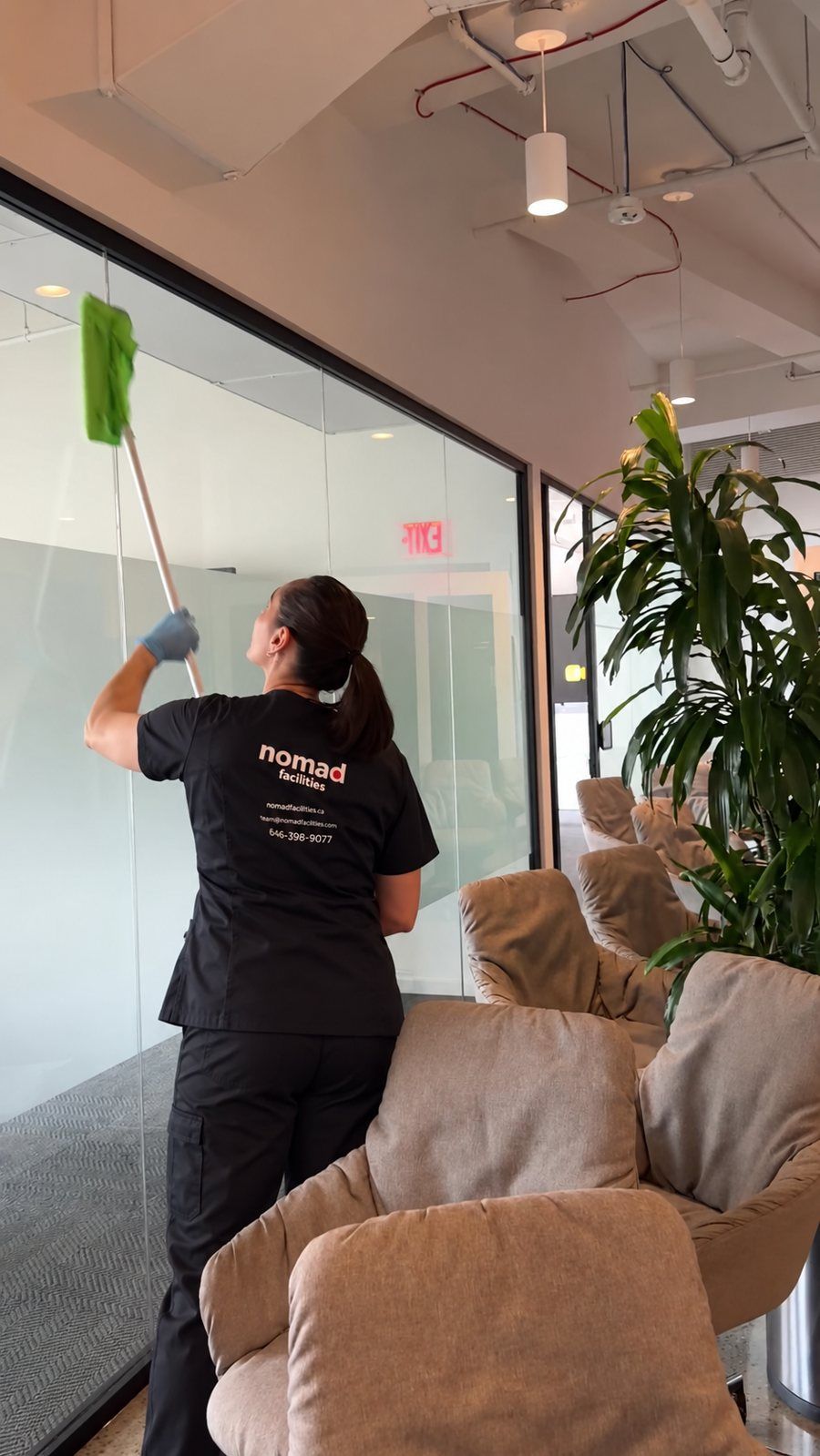
Every workplace has its own routines. Your new cleaning provider should understand the square footage, layout, restrooms, pantries, meeting rooms, floor materials, employee schedules, and recurring trouble spots. A walkthrough should also identify services missing from your existing agreement.
At Nomad Facilities, we prepare a written proposal outlining the areas covered, service frequency, supplies, and pricing.
Step 4: Coordinate with building management
Commercial office buildings often require vendor approval before service begins. Notify building management of the intended change and confirm requirements involving:
- Certificates of insurance
- Employee identification
- Access cards and keys
- After-hours entry
- Service elevators
- Cleaning equipment storage
Completing these steps early reduces the risk of last-minute delays.
Step 5: Establish a transition schedule
Whenever practical, schedule the new cleaning company to begin immediately after the existing provider's final visit. A sample transition schedule:
| When | What to do |
|---|---|
| Two to three weeks before | Review the current agreement, select a new provider (10 questions to ask), and confirm the cleaning scope. |
| One week before | Coordinate insurance, access, supplies, staffing, and the start date. |
| Final day with the existing provider | Confirm completion of work and arrange return of keys and equipment. |
| First day with the new provider | Verify access, staffing, and the agreed cleaning checklist. |
The exact schedule depends on your current contract and building requirements.
Step 6: Review the first two weeks carefully
A new cleaning program may need adjustments after service begins. For example, your team may discover that certain meeting rooms require more attention or that the pantry needs a different cleaning schedule. Make sure your provider has a clear process for communicating and adjusting these details.
At Nomad Facilities, teams receive site-specific training, and supervisors review work against the agreed cleaning plan.
Step 7: Confirm the old vendor's access has ended
Once the transition is complete, confirm that outstanding keys, badges, and access credentials are returned or deactivated according to your building's security procedures. This is particularly important for workplaces with confidential information, expensive equipment, or after-hours access.
The bottom line
Switching cleaning companies isn't just about finding a replacement crew. It's about building a better system for maintaining your workplace. The smoother the transition, the less time your office manager needs to spend worrying about cleaning.